


Work in the studio these days alternates between computer work, shipping, project development, and – more than anything else right now – cutting fabric!
As you know from earlier news this year, I’m only at the studio from 9-noon each day. This means that poor Anna spends the afternoons laboring over the cutting table without me.
Poooooor Anna!
Not-so-poor me. These days, I spend most afternoon hours stitching between dad-care. I’m making progress on a couple projects. I’ll share those with you soon.
On the cutting table, we have a variety of linens that will make up linen sample packs. We’ve carried linen packs in the past, but because the industry always seems to be shifting – with importers manipulating their stock to meet trends – it was very difficult to keep the same linen sample packs consistently in stock. This lack of consistency has been a real hurdle for me.
I finally decided to overcome that hurdle in a few ways. One of those ways is to be flexible in varying the sample packs.
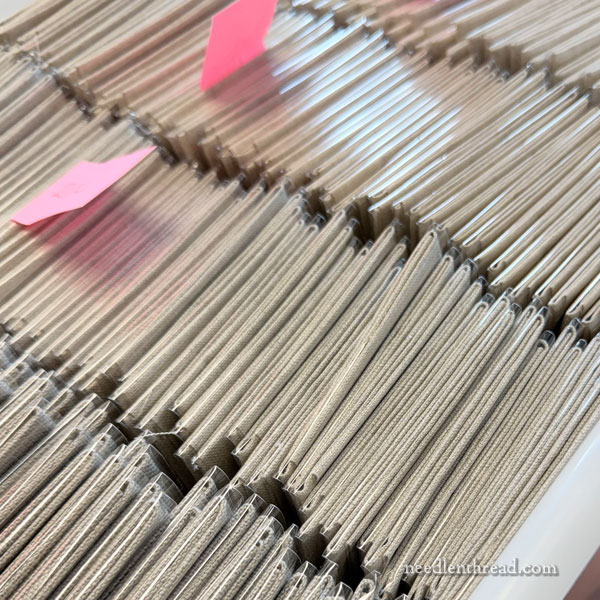
The whole purpose behind linen sample packs is to give stitchers the opportunity to try a variety of linen weights and types with “stitchable” sized cuts – big enough to embroider on and decide if you like it, but small enough to still be affordable.
The 12″ square cuts that we prepare are a great way to experience working with specific fabrics to get a feel for them and to discover what you like and don’t like. It gives you a chance to learn a bit about different ground fabrics, their advantages and disadvantages, and how they can be used.
Then, once you experience the fabric, you’ll know if you want to invest in larger cuts for your own projects. You’ll know what fabrics will work for projects that you conceive. You’ll have a better eye for selecting fabrics for your own use.
So that’s the purpose behind our linen sample packs.
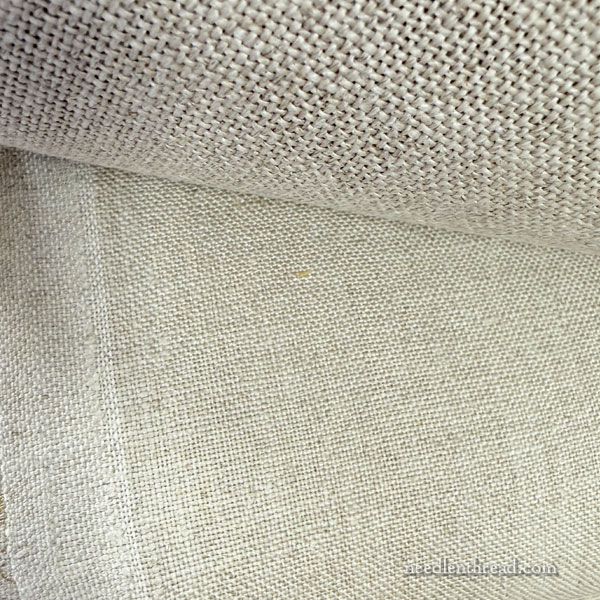
The natural and the white linen sample packs each feature four different linens, in different weights and types. In each pack, there are even-weave and plain weave linens.
Even weave means that the linen is woven with equal numbers of thread, warp and weft, and therefore, these linens are suitable for counted work. I selected these particular even-weaves because the weave fills the surface of the fabric, which makes them suitable for surface embroidery, too.
Plain weave means that there are not equal numbers of woven thread in the warp and weft. The plain weave linens are generally a much higher thread count and are suitable for fine surface embroidery.
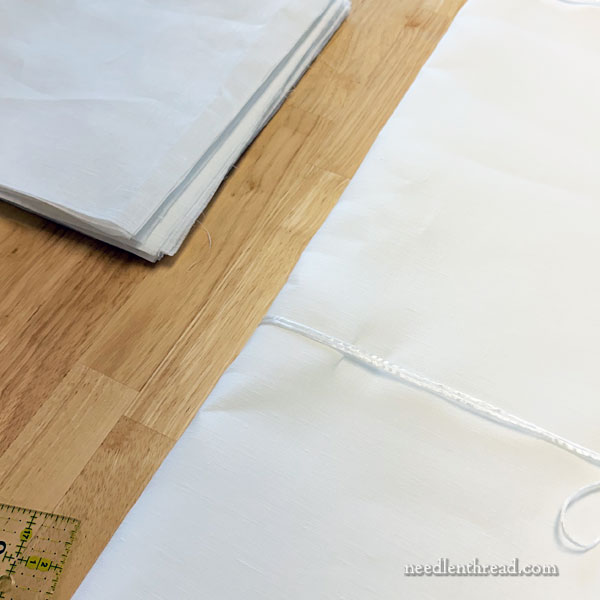
We cut each length of linen down into 12″ squares, cutting them on the thread so that you have a nice, squared-up, ready to use piece that is suitable for small to medium sized projects. Any project that fits within 8″ would give you plenty of room (2″ all around) around the perimeter of the project for finishing or framing.
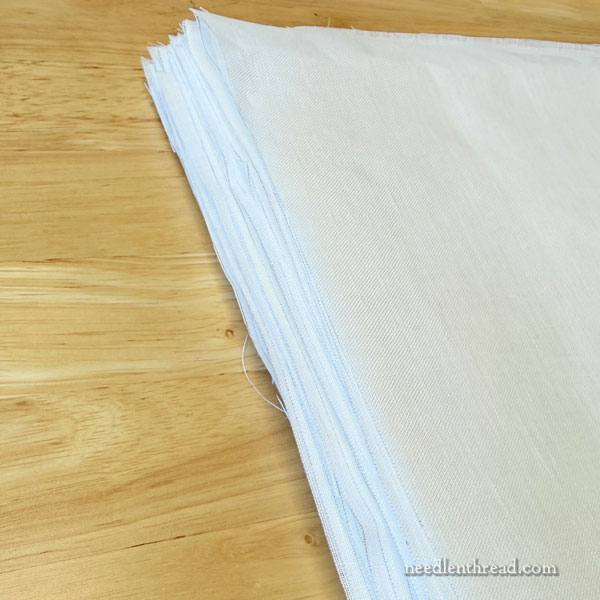
If you’ve been following along on Needle ‘n Thread for a while, you probably know that linen is my all-time favorite fabric for embroidery.
Of course, the primary reason for this is because it is a beautiful fabric, available in myriad weights, weaves, and colors.
But high on the list of Why I Love Linen is the fact that linen is one of the most resilient, forgiving fabrics to stitch on. If you make a mistake and have to un-stitch, a good piece of linen will never betray you. You can pick stitches out of linen with confidence, knowing that the fabric will tolerate the process well.
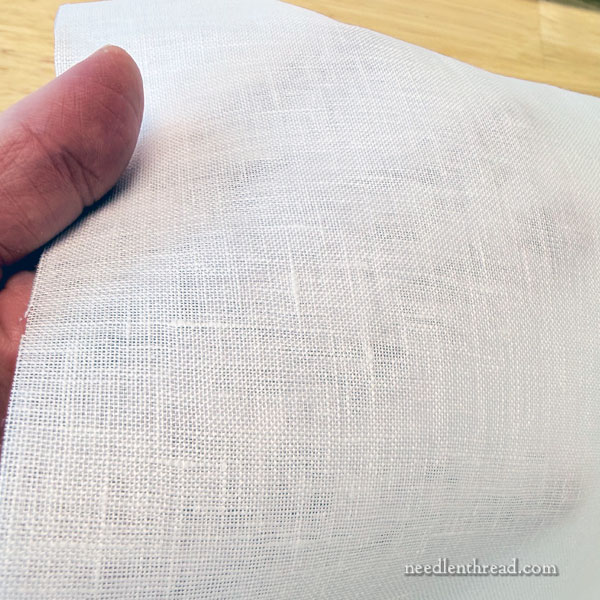
Isn’t that pretty?
Gosh, I just love linen!
Another reason I love linen is that linen loves being used. Doesn’t that sound weird?
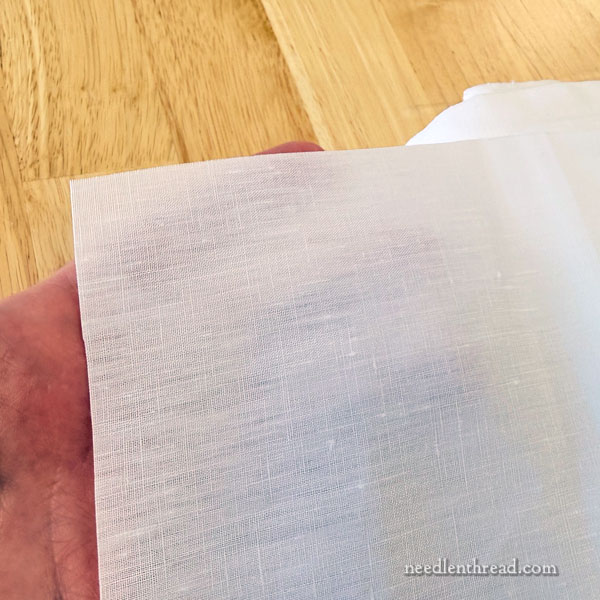
But if you’ve ever had a household linen – like a beautiful table runner, tea cloth, table cloth, or the like – you’ve probably experienced what I mean. Use and laundering and ironing, and more use and more laundering and more ironing, allows good linen to shine. This is when you see linen at its best.
This is why I love vintage and antique linens that have been well-cared for. They get lovelier with age.
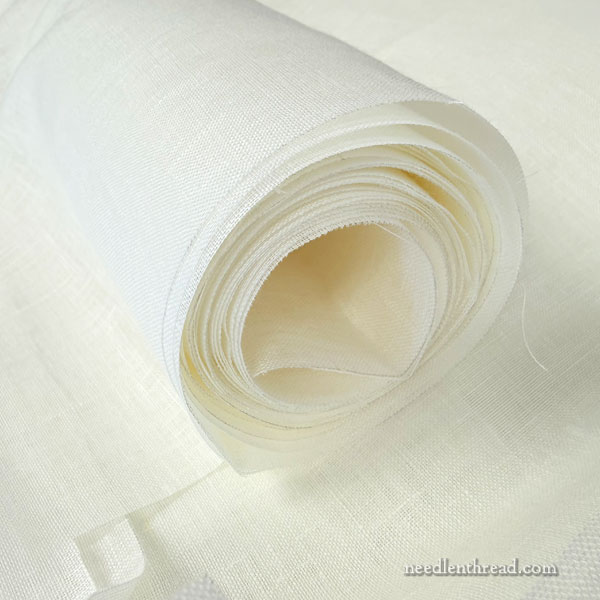
But you want to know The Very Best Part of cutting all this linen for sample packs?
I’ll tell you!
For each linen we cut, we end up with an Excess Roll. This strip of linen is anywhere from 8 – 11″ wide and many, many meters long.
Here in the studio, this linen gets used for all kinds of projects – for testing, for samples, for demonstrations and tutorials. I use the white linen strips to make linen palls or maniturigia for church use. We make Christmas ornaments, we test threads, we experiment with design transfers. It’s our go-to supply for working linen.
And I just love seeing those rolls build up!
They are the harbingers of great adventures to come!
So that’s the Big Thing that’s up in the studio right now, and next week, we’ll have linen sample packs available in the shop again. We’ll start by stocking the natural and white.
Then, a little bit down the road, we’ll be expanding our offerings with some more linen sample packs in an array of glorious colors. We will also be adding a lovely linen-cotton blend in a wide range of colors to our sampler pack offerings.
Many lovely fabrics to try are just around the corner! I’ll announce them here on the blog once they are ready for you.
Hard to believe it’s the end of August already. I hope the month went well for you! And I hope you’re as excited as I am to see a new season on the horizon.
A dear friend just gifted me with some white linen that is well over 100 years old. HER friend got it from her great grandmother who lived in Germany. So, it is likely European linen. Over time, it had gotten dirty. My friend washed and rewashed and eventually gave it a long soak in her miracle cure all- oxi clean. It is indeed clean now, but the white is a strange shade. I’m thinking a dunk in some tea would be nice. The fabric itself has a nice soft and flexible habit. I can’t wait to use it. First thing is to make my friend something special. 🙂
This is so exciting! I was just yesterday working on the autumn leaves from last year and thinking I’d like to make some more. I have couple of your linen sample packs in my stash and I love them!
I remember how I was too late ordering the natural linen sample pack when it first came out, and had to wait until it was restocked, but I got it!
The idea of varying what is inside is a good way to solve the problem of sourcing. In a world of “fast fashion” where super cheap clothing is available everywhere, it can be frustrating to be unable to find high quality fabrics like these fine embroidery linens. “Water, water, everywhere, and not a drop to drink!” Fine linens are so very lovely to work with, and so much better than cheap substitutes. I do admire your high standards and your desire to offer fabrics books, and other supplies that will make the stitcher’s projects more successful and more enjoyable to work with.