
When I ran the ABC Archives Series on Needle ‘n Thread last year, digging up embroidery-related goodies from the past proved popular and helpful. I received a lot of positive feedback on that series!
Unfortunately, there are only 26 letters in the alphabet, and we eventually hit Z.
So lately I’ve been gathering more general embroidery-related topics together that I think may prove helpful for both beginner embroiderers and for those advancing along their embroidery journeys.
Possibly the most popular topic on Needle ‘n Thread has always been thread, so today, I thought I’d offer some odds and ends on the most popular of embroidery threads, stranded cotton – also known as “embroidery floss” here in the States.
If a thread article below piques your curiosity, feel free to click through to the older article and read up on it! You never know what nugget of knowledge you’ll discover!
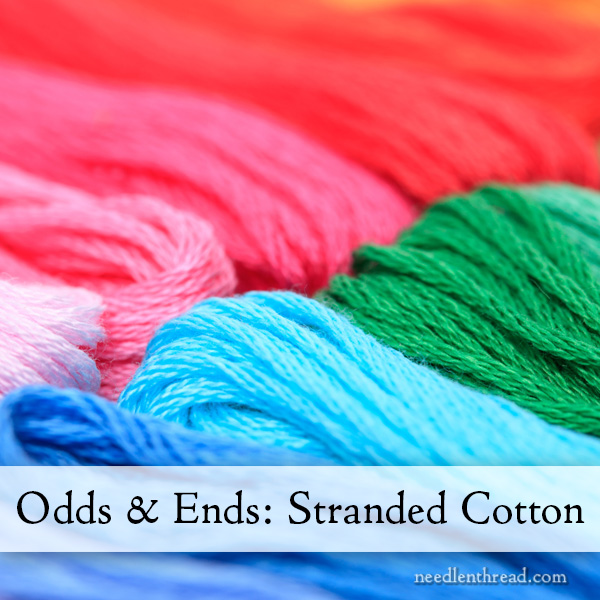
Floss – or stranded cotton – is likely the most common hand embroidery thread on the planet. This is a two-ply mercerized cotton thread that is bundled into (usually) 6 strands that come off the skein as one “thick” thread. The individual strands can be separated out to be used singly or in any number of strands to vary the weight of the stitched line.
Brands of Stranded Floss
There are many brands on the market, some more widely available or more commonly used than others.
Probably the most ubiquitous brand is DMC, which is the most widely and commonly available brand of cotton embroidery floss.
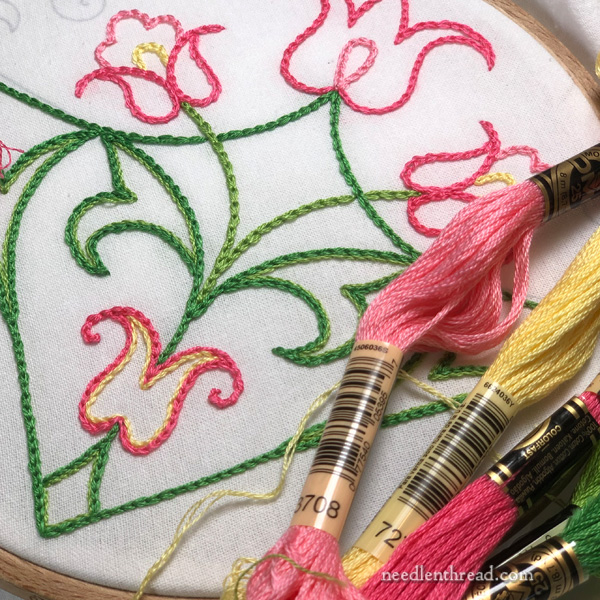
Other good brands include Anchor (owned by DMC Group now, it’s not as widely available in the States as it used to be) and Lecien Cosmo (a very nice brand out of Japan, but also not as widely available).
In the specially-dyed world of floss, Weeks Dye Works is a company out of North Carolina that dyes their own colorways of stranded cotton, and they have it available as 6-stranded, 3-stranded, and 2-stranded threads. The advantage to the 3- and 2-stranded threads is that they purportedly don’t have to be separated and put back together before use, and they’re also put up on spools, which makes them easier to use for punch needle embroidery and similar techniques.
Valdani, a Canadian company producing threads dyed in Romania, dyes stranded cotton particular to their brand’s colorways, and they provide it in both 3-strand balls and in 6-stranded skeins. They guarantee their threads to be absolutely colorfast.
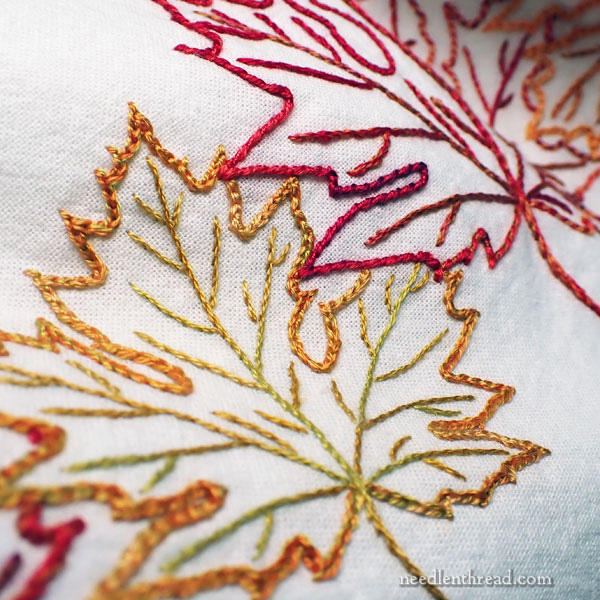
House of Embroidery out of South Africa produces dyed stranded cotton, as does Chameleon Threads, also out of South Africa. Both companies have their own specialty colorways of overdyed threads. I find Chameleon threads to be especially beautiful.
And there are yet other companies – like Threadworx out of California, which produces their own colors of overdyed cotton in both 5-yard and 20-yard skeins, or Cottage Garden Threads out of Australia, which have some really interesting and intense and fun colorways.
And then, of course, there are even smaller boutique dyers around the world who produce their own specialty dyed cotton floss. You can find small batch, hand-dyed threads through websites like Etsy, or through word of mouth from fellow stitches who have their own favorites.
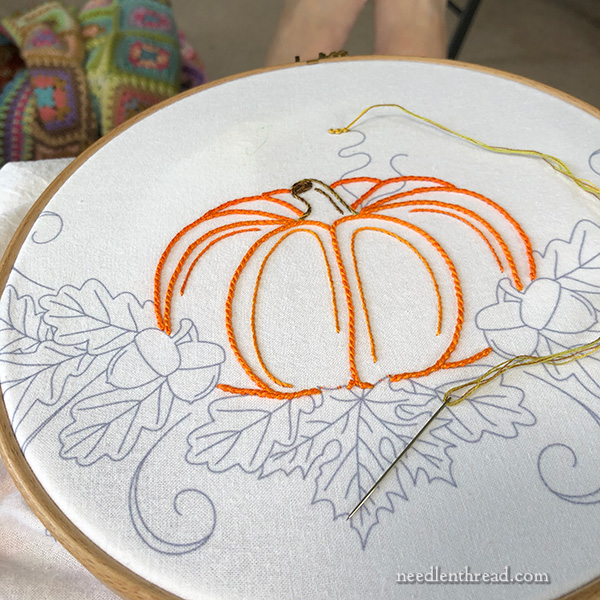
Stranded Cotton in the Archives
Unraveling the Secrets of the Pull Skein: Sometimes, pull skeins can be a real turn-off because they lead to knotted masses of thread as they’re being used. In this article, we discuss the pull skein and how it’s supposed to work.
Stripping Floss (or separating it): When you stitch with floss, it is helpful to “strip” or separate the floss, one strand at a time, from its companions, and then put the number of strands you want to use back together. In this article on stripping floss, we talk about why it’s a good practice, and I show you how to do it with the least frustration.
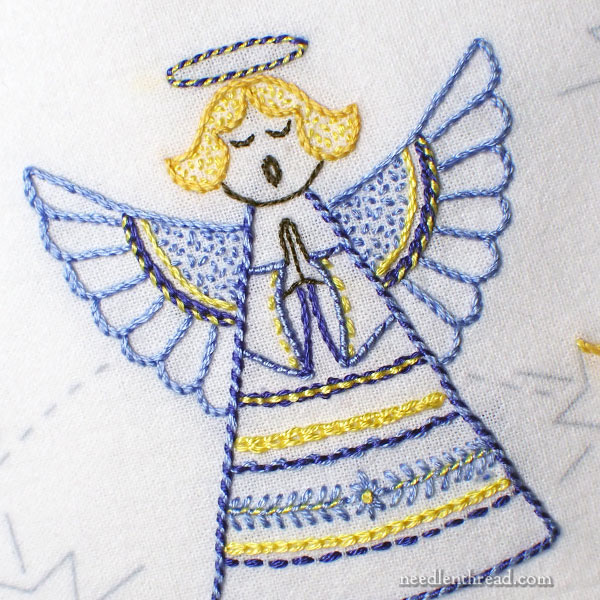
In this article, I show you how you can organize pre-cut floss for a project, so that you can pull one strand at a time from the pre-cut threads easily and efficiently.
A Two-Stranded Clean Start: In this article, I demonstrate how to easily begin your thread when stitching with two strands of floss in the needle. It’s an excellent way to start your stitching thread with minimal work and minimal build-up on the back.
Cosmo’s Variegated Threads & the Laundry: In this article, we looked at Cosmo’s line of variegated floss and chatted a bit about laundering them.
How Many Strands Should I Use? In this article, we look at the weight of stranded cotton, stitched, observing the thickness of the line when stitching with one strand to stitching with all six.
Of Course There’s More!
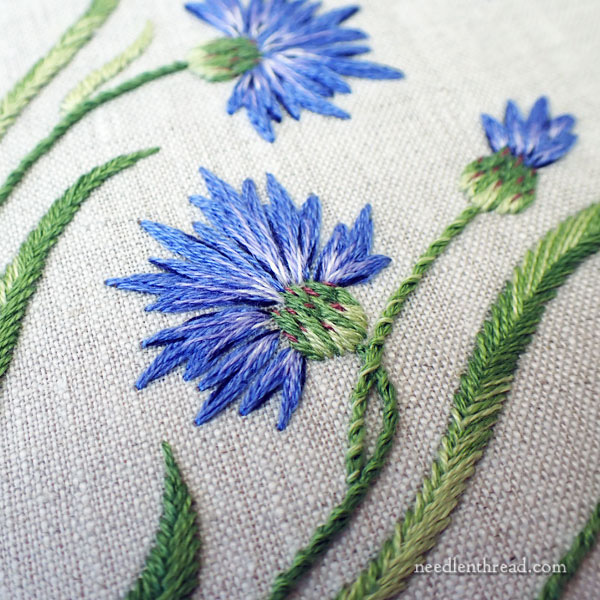
There are other cotton embroidery threads out there. If you want to read about other cotton embroidery threads, try this Brief Guide to Cotton Hand Embroidery Threads – it will take you beyond floss, to other cotton threads.
There are innumerable articles about embroidery threads in the 20 years of Needle ‘n Thread archives! If you are interested in just randomly exploring any articles that have to do with thread, you can always explore the topic tag “Threads.” You never know what you’ll turn up!
Leave A Comment